 Having just crossed over from the down slow onto the down fast, Merchant Navy Class Pacific No.35028 'Clan Line' proundly displaying 'John Bellamy 1931-2007' powers away from Weybridge with 'The Southern Sunset' steam charter from Victorian to Salisbury, on a wet and bitterly cold Saturday 22 March 2008.

About Me
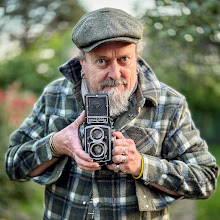
- Chris Nevard Model Railways & Photography
- Professional Photographer, Model Maker, Writer & Pretend Musician
22 March 2008
Cold and wet..............
Having just crossed over from the down slow onto the down fast, Merchant Navy Class Pacific No.35028 'Clan Line' proundly displaying 'John Bellamy 1931-2007' powers away from Weybridge with 'The Southern Sunset' steam charter from Victorian to Salisbury, on a wet and bitterly cold Saturday 22 March 2008.
17 March 2008
Shark Attack!
 Posed on Cement Quay, a modified Hornby 'Shark' departmental brakevan, a recent release from the Margate company. Modifications include, door opened up (knife and glue job), weathering and the addition of a couple of Preiser orange clad railway workers.
08 March 2008
Rural Industrial Grot

A recent shot of the new dried peat transfer shed on Catcott, my 5'00 x 15" '00' diorama/layout of Catcott Crossing which in my parallel universe turned into a halt with siding to serve the local peat works.
02 March 2008
The End of Printed Matter?
Spurred on by a current thread on RM Web, I felt an over due ramble........
Like many, in my world, increasingly far too much time is spent in front of a screen, be it a computer, mobile device or television.
Despite this, people are frequently discussing whether the printed page will be around for much longer. For me, there's nothing like having a good read during the daily ablutions or sitting on a train from a device that doesn't need batteries - I don’t think I’m that unusual in this respect? Having a coffee with my wife whilst casually browsing through a paper magazine or newspaper, is somewhat more sociable than reading a virtual version of the same thing on a laptop.
We're all different and have differing needs I suppose, and because of this there is an increasing requirement for electronic versions of their favourite printed media for those anti social desk tied animals. So, back to the question, does this mean that printed media will die out? No, my feeling is that there'll always be a place for the printed page for a long time yet for reasons already mentioned.
To put this a different way, in the 1960’s, it was thought that we would be living under round or in ‘space age’ high rise flats, wearing space suits (the ‘shell-suit’ never did really catch on), popping food pills. Of course what happened is that people like to touch the past, they love their Victorian villas, they like organic food and nice traditional wooden furniture, olde worlde pubs, steam trains and country walks. What happened to the high rises? They’re pulling them all down and frequently replacing them with lower more traditional looking structures – well they are where we live!
However, things do change, and in the long term of course publishers will have to embrace different and newer formats to run in parallel if they're to remain in business - like it or not. Whether an electronic clone of their current publication is the only route to take is another matter, with people increasing turning to the internet for breaking news, publishers may have to consider a more topical newsy downloadable or web version of their magazines. This would leave the printed magazine for less immediate stuff like 'layout features' and 'how to do' articles etc. The biggest problem ahead will be getting people to part with cash for similar material that may be free on another web page, this I fear will be tricky, albeit impossible. Sponsorship and advertising may be the answer along with a subsidy from the printed version.
Something that could happen right now would be for publishers make back issues available electronically as a PDF (or suchlike) for download or CD for a slightly lower rate than a paper reprint. Like many no doubt, recently I had to recycle dozens of magazines simply due to lack of storage - which is such a shame.
Like many, in my world, increasingly far too much time is spent in front of a screen, be it a computer, mobile device or television.
Despite this, people are frequently discussing whether the printed page will be around for much longer. For me, there's nothing like having a good read during the daily ablutions or sitting on a train from a device that doesn't need batteries - I don’t think I’m that unusual in this respect? Having a coffee with my wife whilst casually browsing through a paper magazine or newspaper, is somewhat more sociable than reading a virtual version of the same thing on a laptop.
We're all different and have differing needs I suppose, and because of this there is an increasing requirement for electronic versions of their favourite printed media for those anti social desk tied animals. So, back to the question, does this mean that printed media will die out? No, my feeling is that there'll always be a place for the printed page for a long time yet for reasons already mentioned.
To put this a different way, in the 1960’s, it was thought that we would be living under round or in ‘space age’ high rise flats, wearing space suits (the ‘shell-suit’ never did really catch on), popping food pills. Of course what happened is that people like to touch the past, they love their Victorian villas, they like organic food and nice traditional wooden furniture, olde worlde pubs, steam trains and country walks. What happened to the high rises? They’re pulling them all down and frequently replacing them with lower more traditional looking structures – well they are where we live!
However, things do change, and in the long term of course publishers will have to embrace different and newer formats to run in parallel if they're to remain in business - like it or not. Whether an electronic clone of their current publication is the only route to take is another matter, with people increasing turning to the internet for breaking news, publishers may have to consider a more topical newsy downloadable or web version of their magazines. This would leave the printed magazine for less immediate stuff like 'layout features' and 'how to do' articles etc. The biggest problem ahead will be getting people to part with cash for similar material that may be free on another web page, this I fear will be tricky, albeit impossible. Sponsorship and advertising may be the answer along with a subsidy from the printed version.
Something that could happen right now would be for publishers make back issues available electronically as a PDF (or suchlike) for download or CD for a slightly lower rate than a paper reprint. Like many no doubt, recently I had to recycle dozens of magazines simply due to lack of storage - which is such a shame.
27 February 2008
Sunny morning at Midsomer
 Tuesday the 26th February, we had a chance to pop by Midsomer Norton. The Somerset & Dorset Railway Heritage Trust have been very busy putting on the finishing touches to the recreation of the famous signalbox.
Since our last visit, the running in board on the up platform has appeared too, this looking very smart on the Southern Region Green it would have worn in the 1950's.
Winding the clock back to around 1972, 6 years after the line closed, for what was thought for good. The B&W image here shows the original signal box shortly prior to demolition.
 Who'd have thought just over a generation later that S&D fan would be able to enjoy 'Midsomer Norton South' signal box again in all its glory, albeit a replica. Hopefully soon a Fowler 2-8-0 S&D 7F will soon be able stand next to this fine recreation of one of England's favourite signal boxes.
The rest of the images from Tuesday 26 Feb 2008:
http://sdjr.fotopic.net/c1465954_1.html
Pictures from the past 35 or so years:
http://sdjr.fotopic.net/c1118990.html
22 February 2008
I was bored......
 ViTrains 37422 & 37403, again used as a test bed for the new baby camera. Here we are looking the other way to normal.
20 February 2008
Another test shot
 Another test shot with the little Canon G9; this time from a little further back, we see 60026 crawling along through the weed ridden tracks pulling a short rake of MEA wagons out from under the stone hopper on Cement Quay.
This as before, was shot with the available mixed lighting and converted with Photoshop CS3's own raw convertor (Adobe RAW 4.3) rather than the supplied Canon software (which I haven't loaded).
There is some slight barrel distortion visible with the overhead metalwork, not really any more than from any other camera of this type. Next time I'll use the Photoshop correction tools to remove this. Chromatic aberration is minimal, with just the slightest of fringing on high contrast edges at the periphery of the field. This was removed fully and very easily during the RAW conversion stage - good reason to use Adobe RAW over the Canon software which is unlikely to have that facility.
19 February 2008
Point and shoot
 Most of my magazine work is carried out with a digital SLR. Sometimes though, it is desirable to place the camera actually on the layout to get an unusual angle. This I normally achieve by resting the camera on a purpose made bean bag. This is all very well, space allowing. For tighter areas I've been looking at the possibilty of of using a smaller pocket sized camera. Drawbags until now with small cameras, have been limited manual settings, a lack of RAW for serious image capture, and a native file size that will be good enough quality for a double page spread.
Canon's recently introduced G9 may well fit the bill, it having full manual controls that are not deeply embedded in clanky menu layers, a 4000x3000 (12MP) resolution, and the all important RAW capture. There is also the added bonus, mainly due to the tiny lens focal length and tiny sensor, that pictures taken on the G9 have an enormous depth of field - something we model photographers are always striving to achieve.
Whilst my trustee Nikon D200 will still be used for the bulk of my work, the little all metal Canon G9 looks like it will be there in the camera bag for those awkward shots. The little camera also doubles up as a holiday and travel camera too!
This above shot of 47145 captured on Cement Quay, was taken with the camera simply resting on the layout. The shutter was fired using the 'self timer' to avoid camera shake. I didn't use any additional lighting as would be the norm, the train here being simply illuminated with the layout's own flourescent lighting. The white balance was left in 'auto', with any final tweeks taking place during the RAW conversion stage using Adobe RAW 4.3/CS3.
16 February 2008
'The Valentine Express'
 WCRC 47826 & 47804 power through the outskirts of Egham with the Doncaster to Portsmouth and return 'The Valentine Express' on Saturday 16 February 2008.
09 February 2008
Tasty Tractor!
 Recently I acquired a couple of the new ViTrains Class 37/4 to play about with. To make this one look a little more lifelike, it's had a dose of the airbrush and some extra details added.
Here we see 37422 'Cardiff Canton' shunting some MEA's around Cement Quay........
10 January 2008
SR Concrete Platform & Shelter
 Over the Christmas period, using various scratchbuilt elements & castings from Monty's Model Railways, I knocked up this shelter based on Stourpaine & Durweston Halt.
12 July 2007
We've never had it so good?
Like many, in 2000 I came back to the hobby after a break of 15 or so years. There is so much more for the modeller these days. We moan about the output from the 'big 4', models wise, they really are seriously impressive compared to 20 years ago, being well finished, run a treat and are generally accurate. I know the Heljan Western has its failings - but hey, what a beast! I'll buy another without thinking about it!
Highly detailed RTR stock has replaced often kak handed kit construction (that's me, I've never been able to get a motorised kit chassis to run properly - just not my thing! White metal, brass or plastic loco bodies and wagons no problem - just the moving bits evade me. One day I'll get that Comet chassis for my 22xx to work properly). Recent RTR offerings looking so much better than ancient white metal kits and the popular thing at the time of mounting them Wrenn chassis with no underframe detail. I have a few of these, the Wrenn body going in the bin - think what they would have been worth now!
Scenery is generally better, with proper textures replacing lurid green sawdust and bright green rubbery lichen. There were of course the exceptions in their day with the likes of Chiltern Green and Pendlebury springing to mind. I think Barry Norman's 1986 vintage book (plus another that fails my memory) and new scenic materials have changed this. I remember when Woodland Scenics launched their range in the early eighties, people were gobsmacked, especially with the foliage material. They've sadly dropped behind with the likes of Nock and Silfor eclipsing them with ground textures (personally I've never seen ragged green bath sponges in real like pretending to be grass. So, come on guys, do your own fibrous grass at half the price of the Germans and you'll scoop the market).
For buildings and infrastructure, we have all these wonderful plastics to replicate stone, brick, tiles etc. In the 'old days' many would have used the printed papers that used to fade green with time. The more dedicated would (and still do) stick in individual bricks, slates, tiles and carv their own stones.
Trackwork looks better, back in the eighties we had Peco 100. SMP had just appeared on the market with their scale bullhead flexitrack, though for points, blobs of solder were the norm for chairs. I remember some of the finer layouts used the correct bullhead rail on rivetted track, though with no chairs it often looked like a contractor's light railway. Now, of course we have Exactoscale & C&L hopefully making good looking point construction a doddle (well I hope so, I have two C&L's to make).
However, one thing that cannot be bought, is vision, design, concept and creating that most difficult thing - atmosphere!
Highly detailed RTR stock has replaced often kak handed kit construction (that's me, I've never been able to get a motorised kit chassis to run properly - just not my thing! White metal, brass or plastic loco bodies and wagons no problem - just the moving bits evade me. One day I'll get that Comet chassis for my 22xx to work properly). Recent RTR offerings looking so much better than ancient white metal kits and the popular thing at the time of mounting them Wrenn chassis with no underframe detail. I have a few of these, the Wrenn body going in the bin - think what they would have been worth now!
Scenery is generally better, with proper textures replacing lurid green sawdust and bright green rubbery lichen. There were of course the exceptions in their day with the likes of Chiltern Green and Pendlebury springing to mind. I think Barry Norman's 1986 vintage book (plus another that fails my memory) and new scenic materials have changed this. I remember when Woodland Scenics launched their range in the early eighties, people were gobsmacked, especially with the foliage material. They've sadly dropped behind with the likes of Nock and Silfor eclipsing them with ground textures (personally I've never seen ragged green bath sponges in real like pretending to be grass. So, come on guys, do your own fibrous grass at half the price of the Germans and you'll scoop the market).
For buildings and infrastructure, we have all these wonderful plastics to replicate stone, brick, tiles etc. In the 'old days' many would have used the printed papers that used to fade green with time. The more dedicated would (and still do) stick in individual bricks, slates, tiles and carv their own stones.
Trackwork looks better, back in the eighties we had Peco 100. SMP had just appeared on the market with their scale bullhead flexitrack, though for points, blobs of solder were the norm for chairs. I remember some of the finer layouts used the correct bullhead rail on rivetted track, though with no chairs it often looked like a contractor's light railway. Now, of course we have Exactoscale & C&L hopefully making good looking point construction a doddle (well I hope so, I have two C&L's to make).
However, one thing that cannot be bought, is vision, design, concept and creating that most difficult thing - atmosphere!
06 July 2007
Engineering or art?
If people stood back from their layouts a little more and squinted at what they had created, thus taking in the 'feel' rather than concentrating on fine detail, there would be some more inspiring work out there. I think of layouts as a bit of theatre or a moving painting. Composition should be such that the viewer's eye is contained within the scene, if the eye wanders 'off set', then the builder has failed.
Capturing atmosphere has nothing to do with the correct number spokes or whether a rivet is 0.5mm too low (or maybe high - heaven forbid!). Composition, colour (a major problem) and overall design are so frequently missed by a country mile, I suppose it's down to that fact that many modellers, whilst mechanically highly skilled, lack the ability to 'see'.
We're all different, the hobby would be very dull if we were all striving for the same thing. We need the engineers, the impressionists and I suppose the dreamers too?
Capturing atmosphere has nothing to do with the correct number spokes or whether a rivet is 0.5mm too low (or maybe high - heaven forbid!). Composition, colour (a major problem) and overall design are so frequently missed by a country mile, I suppose it's down to that fact that many modellers, whilst mechanically highly skilled, lack the ability to 'see'.
We're all different, the hobby would be very dull if we were all striving for the same thing. We need the engineers, the impressionists and I suppose the dreamers too?
02 June 2007
'00' or 'EM'?
In an ideal world, If I was to start all over again I would probably opt for EM, however with 25 years of toy trains under my belt, Personally I wouldn't want to be running two standards, so will stay with '00'. I like to swap stock around between my two (soon to be three – excluding Arne Wharf which is 009) standard gauge layouts anyway. Certainly with 'modern image', EM appears to be a doddle (I guess from reading here), for historical reasons it’s not for me simply due to inter-changeability.
In the defence of ‘00’, like many, I have limited time (model railways are not my only interest), so any time I can save by not re-gauging and re-wheeling locos and stock can be put into the concept, design & scenery instead.
In defence of scale track, the Peco points (mixed with SMP bullhead) on my latest 'trainset' were an experiment (I can and have built my own track), whilst they're far from ideal, they can be made to look quite effective. In hindsight, with the modifications needed to make them look better and work properly, I don't think there was any time saved over building them myself – for this reason it’s unlikely I will repeat the exercise. I do believe that the Peco points with bolt/rail fixing for a modern themed layout portraying flat-bottomed track do look a lot better than rail soldered to copper paxoline (without cosmetic bolts that is). My next ‘trainset’ will use C&L components for this reason – albeit in ‘00’ (another side on shunting plank).
There are a lot of other things which are as important when it come to 'realism'; design, viewing angle (avoid head on viewing angles in '00', not such a problem with a shunting plank) and colouring are very important too. Colouring being a real issue, just because it has Woodland Scenics or suchlike on the side of the packet it doesn't mean it's correct.
I think in this country, many model makers are engineers rather than artists, and there's nothing wrong with that. I get a couple of foreign magazines and it's interesting to see the different approach they take the other side of the various ponds, with many modellers being 'railway modellers’ rather than 'locomotive stock and track modellers'. At a guess, a lot of this is down to the fact that we've been way behind the rest of the world 'ready to run' wise for so many years (until now); this meaning that we've had to spend our time building stock, whereas modellers outside the UK have been able to buy much of what they want off the shelf. With the rolling stock being better, passion and time goes into other aspects of the model railway like concept, scenery and structures etc.
At the end of the day, do what suits you, it's only a hobby after all. Most of what I write is total garbage too....
In the defence of ‘00’, like many, I have limited time (model railways are not my only interest), so any time I can save by not re-gauging and re-wheeling locos and stock can be put into the concept, design & scenery instead.
In defence of scale track, the Peco points (mixed with SMP bullhead) on my latest 'trainset' were an experiment (I can and have built my own track), whilst they're far from ideal, they can be made to look quite effective. In hindsight, with the modifications needed to make them look better and work properly, I don't think there was any time saved over building them myself – for this reason it’s unlikely I will repeat the exercise. I do believe that the Peco points with bolt/rail fixing for a modern themed layout portraying flat-bottomed track do look a lot better than rail soldered to copper paxoline (without cosmetic bolts that is). My next ‘trainset’ will use C&L components for this reason – albeit in ‘00’ (another side on shunting plank).
There are a lot of other things which are as important when it come to 'realism'; design, viewing angle (avoid head on viewing angles in '00', not such a problem with a shunting plank) and colouring are very important too. Colouring being a real issue, just because it has Woodland Scenics or suchlike on the side of the packet it doesn't mean it's correct.
I think in this country, many model makers are engineers rather than artists, and there's nothing wrong with that. I get a couple of foreign magazines and it's interesting to see the different approach they take the other side of the various ponds, with many modellers being 'railway modellers’ rather than 'locomotive stock and track modellers'. At a guess, a lot of this is down to the fact that we've been way behind the rest of the world 'ready to run' wise for so many years (until now); this meaning that we've had to spend our time building stock, whereas modellers outside the UK have been able to buy much of what they want off the shelf. With the rolling stock being better, passion and time goes into other aspects of the model railway like concept, scenery and structures etc.
At the end of the day, do what suits you, it's only a hobby after all. Most of what I write is total garbage too....
11 April 2007
Rant for Wednesday
Embracing the overall scene and the British misconception of what creates a realistic scenario.
In the USA and many parts of Europe, many railway modellers are still way beyond us on the realism stakes (just look at the content of Voie Libre and Model Railroader magazines in particular), they embrace the overall scene with equal passion. Sadly in the UK, many modellers are still totally obsessed with correct number of spokes, then they'll use bright green lichen and sawdust, which looks nothing like the real world to create their landscape! But, because the loco has the correct number of spokes, things are deemed (by them) more realistic – ‘finescale’ even (whatever ‘finescale’ is).
A good test, is to get somebody to judge a layout who has no interest in railways or even modelling. They will make their judgement, not on the correct gauge or rivet detail, but whether the scene looks and feels like the full sized one they see everyday or remember from their childhood days. Do the trees look like trees? Is the grass fibrous rather than scale green bath sponges? Is that road surface smooth and pale, rather than black with 6 inch square boulders masquerading as tarmac? Is the eye kept within the scene, rather than being attracted to something ugly like a row of houses right on the front edge of the baseboard (with no road or anything separating them from a 4 foot fall), or a siding that again runs just millimetres from the front baseboard edge? Finally, where far too many go wrong, is the colouring of the scene, with many aiming for colours that are far too harsh. I bet they paint their engines the right colour though.
A question for many finescale modellers, I’ve been wanting to ask this for some time: why do so namny of you ballast your steam era sidings with granite chippings and a hard shoulder? We all know it was ash. Look a old pictures of goods yards and sidings, they were even, smooth dusty places. Things like this totally ruin the fact that you may have the correct GWR c.1884 vintage two bolt chairs. Don’t get me wrong, I have nothing against detail, however I feel so often it is completely lost when the rest of the scene has been totally neglected. To enjoy detail, you need to be drawn into the layout in the first place, the closer you get the more you explore, a bit like a good bottle of wine where the flavour and nose develops the longer it lingers. Get it all wrong and you won’t even get to the stage of looking at the detail – however good it is.
OK, rant (almost) over! We are slowly getting better, the likes of Pendon have been enormous inspiration to many modellers over the years. Still sadly, there are too many layouts (often P4/S4 too) out there, where it's pretty obvious that the builders have not looked at the overall scene they’re trying to create. Instead they have, as already mentioned concentrated on the fine detail far too much, at the expense of the bigger picture like the initial design. This then results in a layout that may be ‘finescale’ but doesn’t look at all real. I have a feeling that many model makers look at other layouts to base their model making on rather than the real thing real or looking in a book?
Post rant and inspiration.
Recently I had the honour of photographing two different layouts for the printed page, one of them a large circular 'traditional trainset' and the other, a West Country scenario based on more 'realistic' practices. The 'trainset' really surprised me, especially due to the fact that 95% of what I saw was ready made and out of the box. The modellers however used many of the buildings, thinking particularly of the street scenes, in such a way that it was totally convincing if captured from an angle to hide the roundy-roundy nature of the layout. Basically, they have vision based on looking at the real thing, which is far more important than those wretched GWR chair bolts.
The 'West Country' scenario, whilst like the ‘trainset’ didn't use 'finescale' track (something which we judge layouts by far too much here in the UK), everything was spot on from initial design, track layout and buildings, right through to scenery, and in my book, most importantly the colouring. Again you could tell that the modellers got out and observed the real thing, absorbing the feel and look of a real world. They then put all this together in miniature and have created something quite special. I passed a few of the pictures of these two layouts in front of a couple non-railway modellers the other day, and their words were "is that a model or the real thing".
Flame suit now on.................
In the USA and many parts of Europe, many railway modellers are still way beyond us on the realism stakes (just look at the content of Voie Libre and Model Railroader magazines in particular), they embrace the overall scene with equal passion. Sadly in the UK, many modellers are still totally obsessed with correct number of spokes, then they'll use bright green lichen and sawdust, which looks nothing like the real world to create their landscape! But, because the loco has the correct number of spokes, things are deemed (by them) more realistic – ‘finescale’ even (whatever ‘finescale’ is).
A good test, is to get somebody to judge a layout who has no interest in railways or even modelling. They will make their judgement, not on the correct gauge or rivet detail, but whether the scene looks and feels like the full sized one they see everyday or remember from their childhood days. Do the trees look like trees? Is the grass fibrous rather than scale green bath sponges? Is that road surface smooth and pale, rather than black with 6 inch square boulders masquerading as tarmac? Is the eye kept within the scene, rather than being attracted to something ugly like a row of houses right on the front edge of the baseboard (with no road or anything separating them from a 4 foot fall), or a siding that again runs just millimetres from the front baseboard edge? Finally, where far too many go wrong, is the colouring of the scene, with many aiming for colours that are far too harsh. I bet they paint their engines the right colour though.
A question for many finescale modellers, I’ve been wanting to ask this for some time: why do so namny of you ballast your steam era sidings with granite chippings and a hard shoulder? We all know it was ash. Look a old pictures of goods yards and sidings, they were even, smooth dusty places. Things like this totally ruin the fact that you may have the correct GWR c.1884 vintage two bolt chairs. Don’t get me wrong, I have nothing against detail, however I feel so often it is completely lost when the rest of the scene has been totally neglected. To enjoy detail, you need to be drawn into the layout in the first place, the closer you get the more you explore, a bit like a good bottle of wine where the flavour and nose develops the longer it lingers. Get it all wrong and you won’t even get to the stage of looking at the detail – however good it is.
OK, rant (almost) over! We are slowly getting better, the likes of Pendon have been enormous inspiration to many modellers over the years. Still sadly, there are too many layouts (often P4/S4 too) out there, where it's pretty obvious that the builders have not looked at the overall scene they’re trying to create. Instead they have, as already mentioned concentrated on the fine detail far too much, at the expense of the bigger picture like the initial design. This then results in a layout that may be ‘finescale’ but doesn’t look at all real. I have a feeling that many model makers look at other layouts to base their model making on rather than the real thing real or looking in a book?
Post rant and inspiration.
Recently I had the honour of photographing two different layouts for the printed page, one of them a large circular 'traditional trainset' and the other, a West Country scenario based on more 'realistic' practices. The 'trainset' really surprised me, especially due to the fact that 95% of what I saw was ready made and out of the box. The modellers however used many of the buildings, thinking particularly of the street scenes, in such a way that it was totally convincing if captured from an angle to hide the roundy-roundy nature of the layout. Basically, they have vision based on looking at the real thing, which is far more important than those wretched GWR chair bolts.
The 'West Country' scenario, whilst like the ‘trainset’ didn't use 'finescale' track (something which we judge layouts by far too much here in the UK), everything was spot on from initial design, track layout and buildings, right through to scenery, and in my book, most importantly the colouring. Again you could tell that the modellers got out and observed the real thing, absorbing the feel and look of a real world. They then put all this together in miniature and have created something quite special. I passed a few of the pictures of these two layouts in front of a couple non-railway modellers the other day, and their words were "is that a model or the real thing".
Flame suit now on.................
03 March 2007
'OO' bullhead ready to lay track system
I think there would be enourmous demand for a ready made 16.5mm bullhead UK outline track - just look at how many club layouts use SMP with copperclad points. I may model 00, but I do consider myself a serious modeller, there is alot more to creating something that looks real than a couple of mm in the gauge - especially when viewing side on. Dare I say it, but there are alot of EM/P4 layouts out there that don't look that real, despite correct gauge (and there are alot of really stunning layouts too). What does matter though, is that flat-bottomed trackwork looks nothing like traditional british bullhead rail and chairs, this to me is far more important than the gauge. Bullhead rail isn't unique to the UK, I've seen versions of it in northern Europe too.
I have the feeling that Peco are rather stuck with their heads in the ground, proof there is that they only just discovered the internet a couple of years ago. The problem is, that unless they move on, somebody else is going to knock something up in China and push them out of any potential market before they even get there. With several European and US producers now producing superior flatbottomed trackwork, they're already slipping behind I magine. Remember, we're only taking about a bit of plastic moulding with rails in, not a new car.
If the cost is a little more, I'm sure that won't be a barrier to those that really want a good product, after all we don't think twice about paying good money for a quality RTR locomotive or stock? Whilst many modellers can't spend the money, there are many that can and will.
The P4 Track Company, SMP & C&L are almost there, it only takes one of them to make that final leap - I'm sure one of them will very soon. Peco, despite behaving much like the stork, will then have missed the boat unless they can then produce something better and cheaper. I think that might well happen, they'll then take the plunge after a third party has proven that there is a real demand.
I predict we'll have ready to lay 'OO' bullhead complete track system within three years.
I have the feeling that Peco are rather stuck with their heads in the ground, proof there is that they only just discovered the internet a couple of years ago. The problem is, that unless they move on, somebody else is going to knock something up in China and push them out of any potential market before they even get there. With several European and US producers now producing superior flatbottomed trackwork, they're already slipping behind I magine. Remember, we're only taking about a bit of plastic moulding with rails in, not a new car.
If the cost is a little more, I'm sure that won't be a barrier to those that really want a good product, after all we don't think twice about paying good money for a quality RTR locomotive or stock? Whilst many modellers can't spend the money, there are many that can and will.
The P4 Track Company, SMP & C&L are almost there, it only takes one of them to make that final leap - I'm sure one of them will very soon. Peco, despite behaving much like the stork, will then have missed the boat unless they can then produce something better and cheaper. I think that might well happen, they'll then take the plunge after a third party has proven that there is a real demand.
I predict we'll have ready to lay 'OO' bullhead complete track system within three years.
02 March 2007
And then there was light ....
I've been playing on and off with model railways since 1978, though like many people, I get bored from time to time and venture off into other hobbies like messing about with old cars etc (then get fed up because it all costs too much). Railways, whether model making or photographing the real thing, always come bouncing back! So with almost 30 years down the line (excuse pun there), I guess this crazy hobby is in the blood!
My model making 'skills', I seriously believe to be minimal, though if I can use a bodge to create the illusion of something better I will. I approach the subject in a very impressionistic (is that a word?) way, firmly believing that a balanced overall composition with correct colouring, does far more to create the effect of reality than correct bolts and spokes. I feel that many 'fine scale' modellers are far too obsessed with fine detail and neglect the over all feel of a layout, this then results in something, whilst supposedly 'correct' doesn't look real at all. Each to their own of course, if we all liked the same, we'd all be producing the same sort of thing - which would be very dull indeed!
What inspires me?
1/ Copenhagen Fields - well, never seen it for real, but the pictures of it look stunning.
2/ That big German riverside layout at Warley '06 - about 400 ft long....
3/ Much of the content of Voie Libre (French narrow gauge modelling mag) - Francois Fontana, the editor, just has that rare knack of spotting really inspiring work - then capturing it so beautifully as digits and then in turn to the printed page.
4/ More or less anything S&DJR - with Enginewood & Bleakhouse Road topping the list.
5/ Rye - an EM gauge 'what if' fictitious extension of the K&ESR. Last saw it once 5 years ago, I fear this layout has been retired.
6/ Everything at Pendon.
7/ Most of the output of Hull MRS! The guys show extraordinary vision for a club and they're always looking 'outside the box'.
8/ Barry Norman's layout in a recent BRM.
Dislikes (I'll probably get into trouble here):
1/ Big club layouts modelled with no vision (always going to problem with anything designed by a committee I imagine? There are exceptions of course - just look at Dewsbury Midland and Romsey for starters) just doing the same old same old....
2/ Big flat test tracks, often seen at shows with poor basic scenery, pretending to be layouts with stock flying around at break neck speed.
3/ Woodland Scenics (or any other similar brand) bits of bright green foam, pretending to be grass. Grass is fibrous, in real life, one foot square bright green bath sponges would never look like grass in my wildest deams - unless of course I'd been smoking the stuff?
4/ No back scenes (how can a beer belly be a more realistic backdrop to the punter at a show - cover it up, a backscene is ideal for that!).
5/ Grubby & tatty back scenes.
6/ Backscenes painted with a tar brush (with lots of bits in it, ideally dark emerald green gloss) using one's left foot.
7/ Square corners in backscenes (bad energy?).
8/ Scruffy unfinished baseboard edges & tatty bits of rag on the front of layouts at shows, so often held in place with drawing pins.
9/ No lighting - a simple spot on a pole is better than nothing?
10/ Cars, figures & bikes replicating something that should be obviously moving, but they're static. Cars & lorries should be parked or waiting at junctions (which if in London, means hours). Stationary poses for figures, sitting or standing still. Bikes mid flight, but stationary.. ahhhhhhhggg no....
My model making 'skills', I seriously believe to be minimal, though if I can use a bodge to create the illusion of something better I will. I approach the subject in a very impressionistic (is that a word?) way, firmly believing that a balanced overall composition with correct colouring, does far more to create the effect of reality than correct bolts and spokes. I feel that many 'fine scale' modellers are far too obsessed with fine detail and neglect the over all feel of a layout, this then results in something, whilst supposedly 'correct' doesn't look real at all. Each to their own of course, if we all liked the same, we'd all be producing the same sort of thing - which would be very dull indeed!
What inspires me?
1/ Copenhagen Fields - well, never seen it for real, but the pictures of it look stunning.
2/ That big German riverside layout at Warley '06 - about 400 ft long....
3/ Much of the content of Voie Libre (French narrow gauge modelling mag) - Francois Fontana, the editor, just has that rare knack of spotting really inspiring work - then capturing it so beautifully as digits and then in turn to the printed page.
4/ More or less anything S&DJR - with Enginewood & Bleakhouse Road topping the list.
5/ Rye - an EM gauge 'what if' fictitious extension of the K&ESR. Last saw it once 5 years ago, I fear this layout has been retired.
6/ Everything at Pendon.
7/ Most of the output of Hull MRS! The guys show extraordinary vision for a club and they're always looking 'outside the box'.
8/ Barry Norman's layout in a recent BRM.
Dislikes (I'll probably get into trouble here):
1/ Big club layouts modelled with no vision (always going to problem with anything designed by a committee I imagine? There are exceptions of course - just look at Dewsbury Midland and Romsey for starters) just doing the same old same old....
2/ Big flat test tracks, often seen at shows with poor basic scenery, pretending to be layouts with stock flying around at break neck speed.
3/ Woodland Scenics (or any other similar brand) bits of bright green foam, pretending to be grass. Grass is fibrous, in real life, one foot square bright green bath sponges would never look like grass in my wildest deams - unless of course I'd been smoking the stuff?
4/ No back scenes (how can a beer belly be a more realistic backdrop to the punter at a show - cover it up, a backscene is ideal for that!).
5/ Grubby & tatty back scenes.
6/ Backscenes painted with a tar brush (with lots of bits in it, ideally dark emerald green gloss) using one's left foot.
7/ Square corners in backscenes (bad energy?).
8/ Scruffy unfinished baseboard edges & tatty bits of rag on the front of layouts at shows, so often held in place with drawing pins.
9/ No lighting - a simple spot on a pole is better than nothing?
10/ Cars, figures & bikes replicating something that should be obviously moving, but they're static. Cars & lorries should be parked or waiting at junctions (which if in London, means hours). Stationary poses for figures, sitting or standing still. Bikes mid flight, but stationary.. ahhhhhhhggg no....
Subscribe to:
Posts (Atom)